
For Florida buyers and sellers closing in Orange or Lake County
The mistakes that cost money often happen weeks before closing day
A free guide to the four phases of a Florida closing, the documents that decide how it goes, and the nine myths that quietly cost buyers and sellers money.
Written for Florida closings, not general advice
Covers the title commitment, the survey, and the lien search
7 pages, about twenty minutes to read, start to finish
Where should we send it?
Your information stays with our office. We never sell or share it, and no mobile information is shared with third parties.
Board Certified by The Florida Bar || Real Estate Law certification || 12+ years, transactions only || Residential and commercial closings || Orange and Lake County, Florida || Title through three national underwriters
You may only do this a few times in your life
Most people buy or sell a home only a handful of times. There is no getting good at something you do three times.
So the closing table ends up being the first place anyone explains how any of it works. By then the decisions that mattered were made weeks earlier.
You signed a contract with dates in it. A title commitment arrived and looked like paperwork. A survey and a lien search came back and nobody said what to look for.
Generally, your escrow deposit is due three days from the effective date
Your title commitment lists items you generally are allowed to object to
In most situations, these windows close without anyone mentioning them

What confusion at the closing table actually costs
Buyers and sellers could lose anywhere from five thousand dollars to fifty thousand or more. Almost never from anything reckless. Usually from not knowing what to look at, or when.
A deposit gone because a date passed quietly or language written by a real estate agent isn’t enforceable
Money already spent on the inspection and the appraisal
Title items that could have been removed, but were not
Homestead and portability missed by the calendar
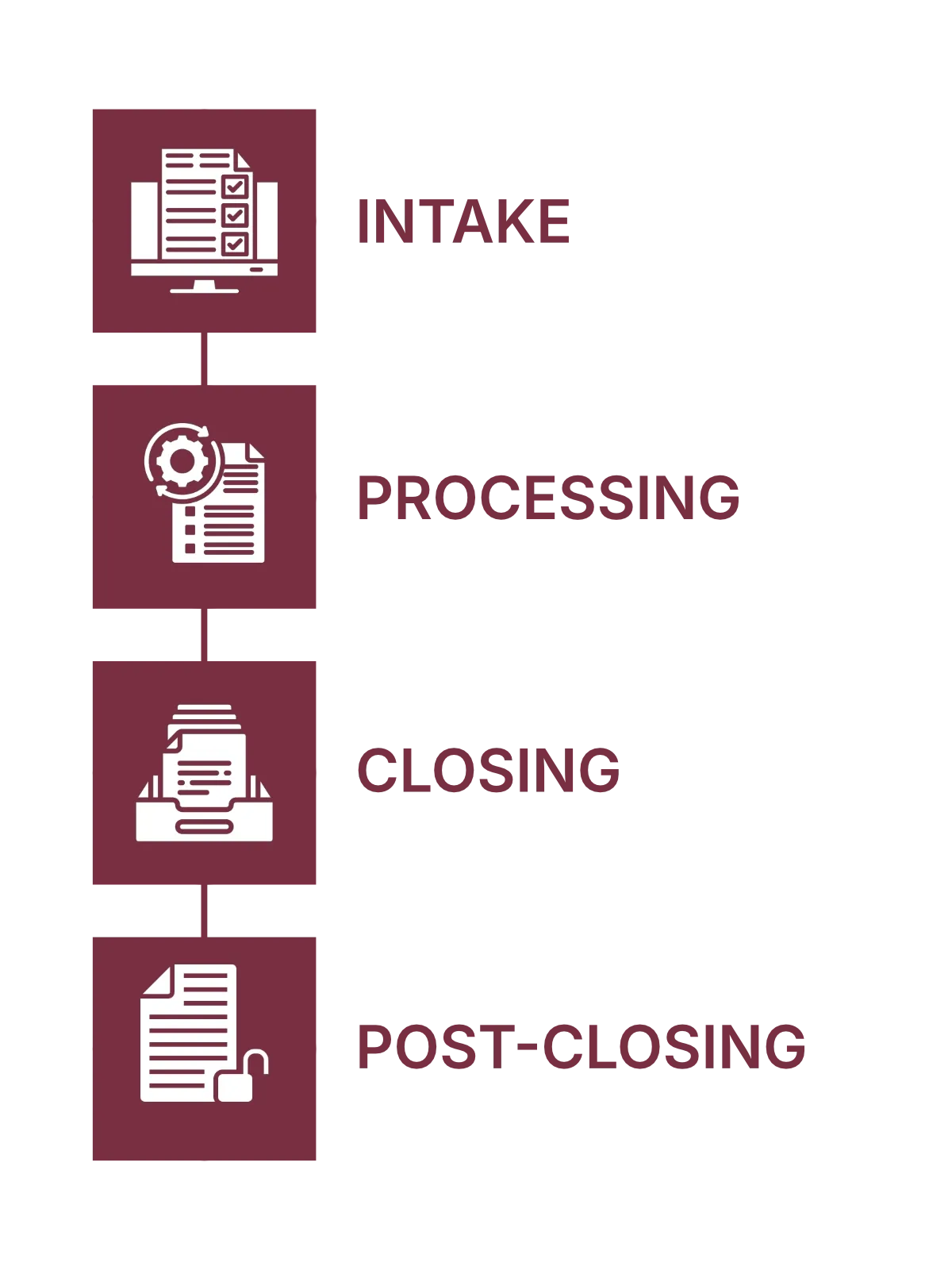
A Florida closing moves through four phases
Florida does not require you to have an attorney at your closing. That is true, and it is the most repeated fact in this business. Somewhere along the way it stopped being a legal fact and became an assumption that an attorney is unnecessary.
Most closings do go through fine. The ones that do not tend to fail the same way. Something surfaces on title, or the survey, or the inspection, and by the time anyone understands what it means, the date to do something about it has passed.
Knowing the order is what lets you ask the right question at the right time, instead of hearing the answer at signing.
Intake: the contract arrives and title status is checked against it
Processing: the commitment, lien search, and estoppel orders go out
Closing: figures are finalized and signings are scheduled
Post-closing: wires go out and the documents get recorded
What is inside the guide
The four phases of a Florida closing, in order
Why the first 48 to 72 hours decide the rest of it
What a title commitment is, and what you are allowed to object to
Surveys, municipal lien searches, and estoppel certificates in plain English
The three day lender rule, and the three changes that restart the clock
Cash, financed, for sale by owner, and commercial timelines compared
Nine myths that cost buyers and sellers money
7 pages, about twenty minutes to read.
What happens after you send the form
No call, no pitch, no obligation. This is the whole thing.
1
You fill in three fields
First name, email, and mobile number. That is the entire form.
2
The guide arrives by email
It lands in your inbox within a minute, so you can read it whenever you have twenty minutes.
3
We check in a few times
A short series of emails and texts on the parts people ask about most. Reply STOP or unsubscribe at any point.
4
You decide about us
If you want a second set of eyes on your contract or your title commitment, tell us where you stand and we will be straight with you about whether we should be involved.
1
You fill in three fields
First name, email, and mobile number. That is the entire form.
2
The guide arrives by email
It lands in your inbox within a minute, so you can read it whenever you have twenty minutes.
3
We check in a few times
A short series of emails and texts on the parts people ask about most. Reply STOP or unsubscribe at any point.
4
You decide about us
If you want a second set of eyes on your contract or your title commitment, tell us where you stand and we will be straight with you about whether we should be involved.

Chelsea Metka, Florida board certified real estate attorney
I have spent more than twelve years doing nothing but real estate transactions. Residential and commercial, buyers and sellers, landlords and lenders, and the title work underneath all of it.
In that time I have watched people lose real money at closing tables. Almost never from anything reckless. Usually from not knowing what to look at, or when. This guide is the conversation I end up having over and over, written down so you can have it before you need it.
I work with buyers, sellers, investors, and agents throughout West Orange County and South Lake County, including Winter Garden, Clermont, Horizon West, Windermere, Ocoee, and Minneola.
Board Certified in Real Estate Law by The Florida Bar
More than twelve years devoted to transactional real estate
Purchase and sale, leasing, financing, title, and closings
Title insurance written through Old Republic, Stewart, and First American
Questions people ask before they download
Do I actually need an attorney for a Florida closing?
Florida does not require one, and most closings go through fine without one. The ones that do not tend to fail in the same place. Something surfaces on title, the survey, or the inspection, and the date to do anything about it has already passed. The guide is written so you can tell which kind of closing you are in.
I am already under contract. Is it too late?
That is usually the point where an attorney is most useful. There are still dates ahead of you, and the title commitment, the survey, and the estoppel have probably not been read closely yet.
My agent is handling everything. Is this different?
Your agent can fill in the blanks on a standard form. Negotiating contract language, drafting an addendum, and advising on legal risk are the practice of law, which agents are not licensed to do. This tends to surface with days left on the clock.
It is a cash deal, so it is simpler.
Cash deals do move faster. But there is no lender running its own review of title, so that second set of eyes does not exist. The review is either yours or nobody's.
Is this a sales call in disguise?
No. The guide arrives by email and you are free to read it and never hear from us again. If you want us to look at where you are, there is a form for that, and it stays your move.
Does downloading this make you my attorney?
No. Reading this page or filling in this form does not create an attorney-client relationship. That happens only when you and The Metka Law Firm, P.A. sign a written engagement agreement.
Get the guide before you need it
Some people read this a year before they need it.
Some read it four days before closing.
Both are fine, it is just easier the earlier you have it.
Where should we send it?
Your information stays with our office. We never sell or share it, and no mobile information is shared with third parties.
Attorney advertising. This page is advertising material published by The Metka Law Firm, P.A.
The information on this page and in the guide is general educational information, not legal advice for your situation. Reading this page, downloading the guide, or submitting this form does not create an attorney-client relationship. No confidential relationship is formed until you and The Metka Law Firm, P.A. sign a written engagement agreement.
Chelsea L. Metka is licensed to practice law in the State of Florida. The firm serves clients throughout Central Florida, primarily Orange and Lake counties.
By providing your mobile number you agree to receive text messages from The Metka Law Firm, P.A. Message frequency varies and message and data rates may apply. Reply STOP to opt out or HELP for help. No mobile information will be shared with third parties or affiliates for marketing or promotional purposes.